




Understanding Durable Off-Road Electric Scooters
A lot of riders buy off-road Electric Scooters by looking at top speed first, then regret it after the first few rough rides. Gravel, ruts, washboard sections, wet dirt, and repeated curb drops expose weak stems, harsh suspension, low-grip tires, and batteries that were never meant for constant vibration. That is why durability matters more than a flashy spec sheet when your route includes real trail conditions instead of clean pavement.
This guide takes a practical route through the decision. You will see what durability actually means in 2026, which scooter specs matter most, how the GT1 Dual Motor Off-Road Electric Scooter fits the category, and how to choose the right setup for your terrain and body weight. Along the way, we will also connect scooters to related Electric Bikes, Electric Skateboards, and broader Electric mobility solutions for riders building smarter Eco-friendly transportation habits.
What Makes an Off-Road Scooter Truly Durable?
Durability starts with the structure you cannot ignore once the surface gets rough. A serious off-road scooter needs a rigid frame, a stable steering column, enough deck space for stance changes, and suspension that can absorb repeated impacts without turning the ride into a wobble test. On loose terrain, traction is part of durability too, because every slip increases stress on the motor, brakes, and rider.
Core durability terms to know
- Frame rigidity: how well the chassis resists twisting under rider load and repeated hits.
- Suspension travel: how much vertical movement the suspension has to absorb bumps before impact reaches your arms and knees.
- Dual motors: two drive units that improve torque delivery and help on steeper grades.
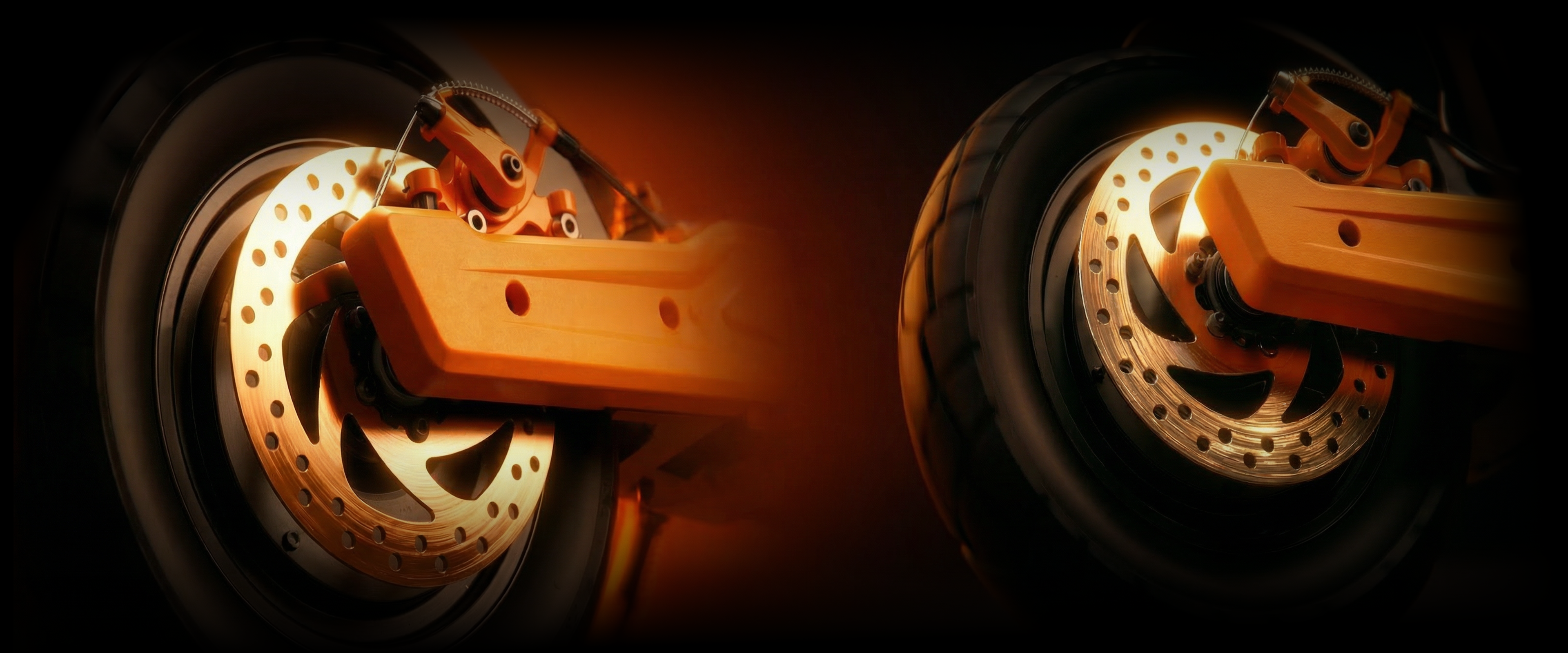
- Disc braking: mechanical stopping hardware that gives more control than light-duty electronic braking alone.
- BMS: battery management system, which protects cells from overcharge, overheating, and imbalance.
- Pneumatic tires: air-filled tires that improve grip and absorb vibration better than solid tires.
Why does it matter on real terrain
When you ride dirt, gravel, or mixed pavement, weak parts fail gradually before they fail visibly. A flexy stem can create steering vagueness. Low-quality tires bounce instead of conforming to the ground. Undersized brakes heat up faster on downhills. Battery packs with poor protection suffer more from heat and vibration. The CPSC says compliance with relevant UL safety standards significantly reduces the risk of injuries and deaths from micromobility battery fires, which is why Lithium-ion Battery Technology and battery protection deserve as much attention as motor power. (cpsc.gov)
How scooters differ from adjacent categories
If you are also comparing Electric Bikes, E-bikes, Fat Tire E-bikes, or Electric Skateboards, the durability logic is similar but the stress pattern is different. Scooters put more demand on stem strength, compact suspension, and deck stability. E-bikes spread rider weight over a longer frame and larger wheels, while skateboards depend more on deck flex, truck stability, and wheel material. iSinwheel’s catalog shows this clearly: the GT1 focuses on suspension, tires, and braking, while products like the U5 Pro folding e-bike and V10 off-road skateboard prioritize different geometry and ride-control trade-offs.
GT1 Dual Motor Off-Road Electric Scooter: Why It Fits the Category
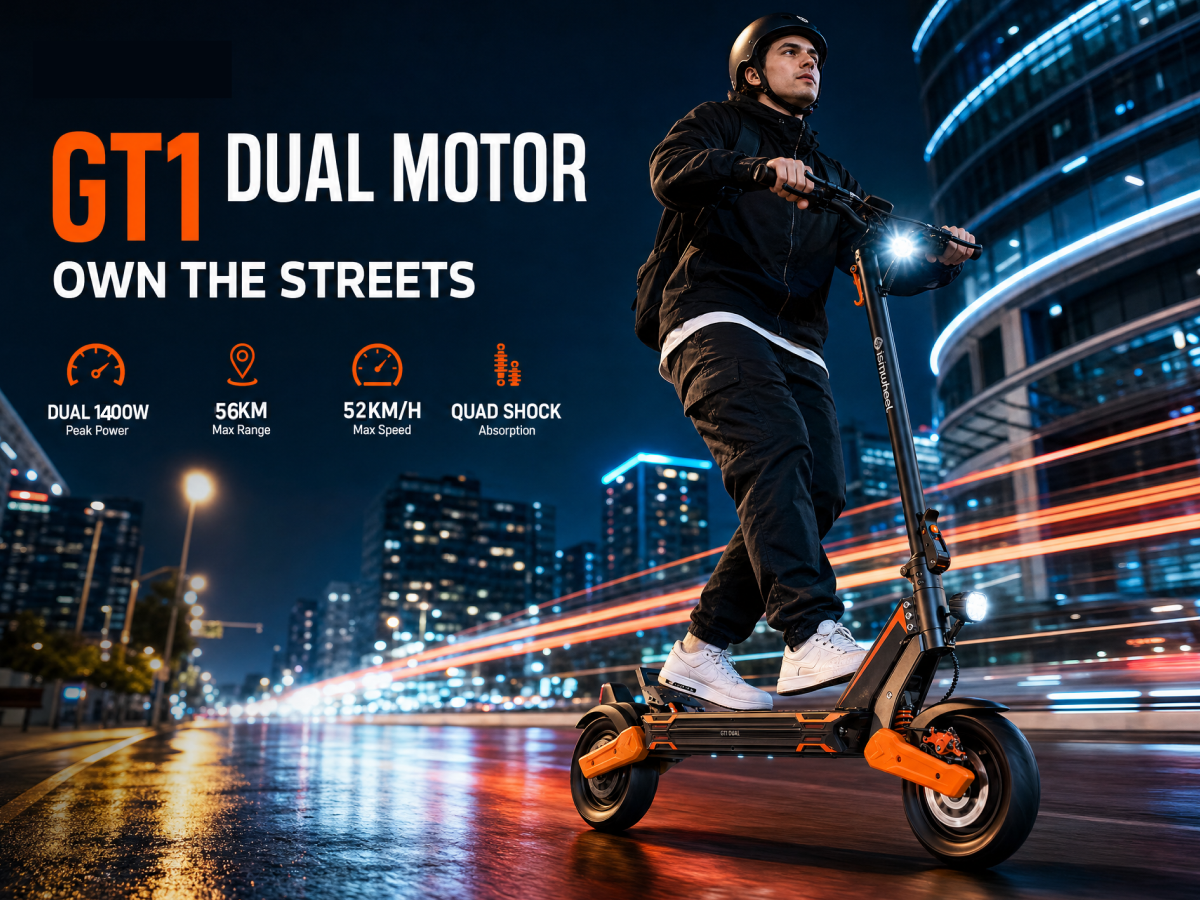
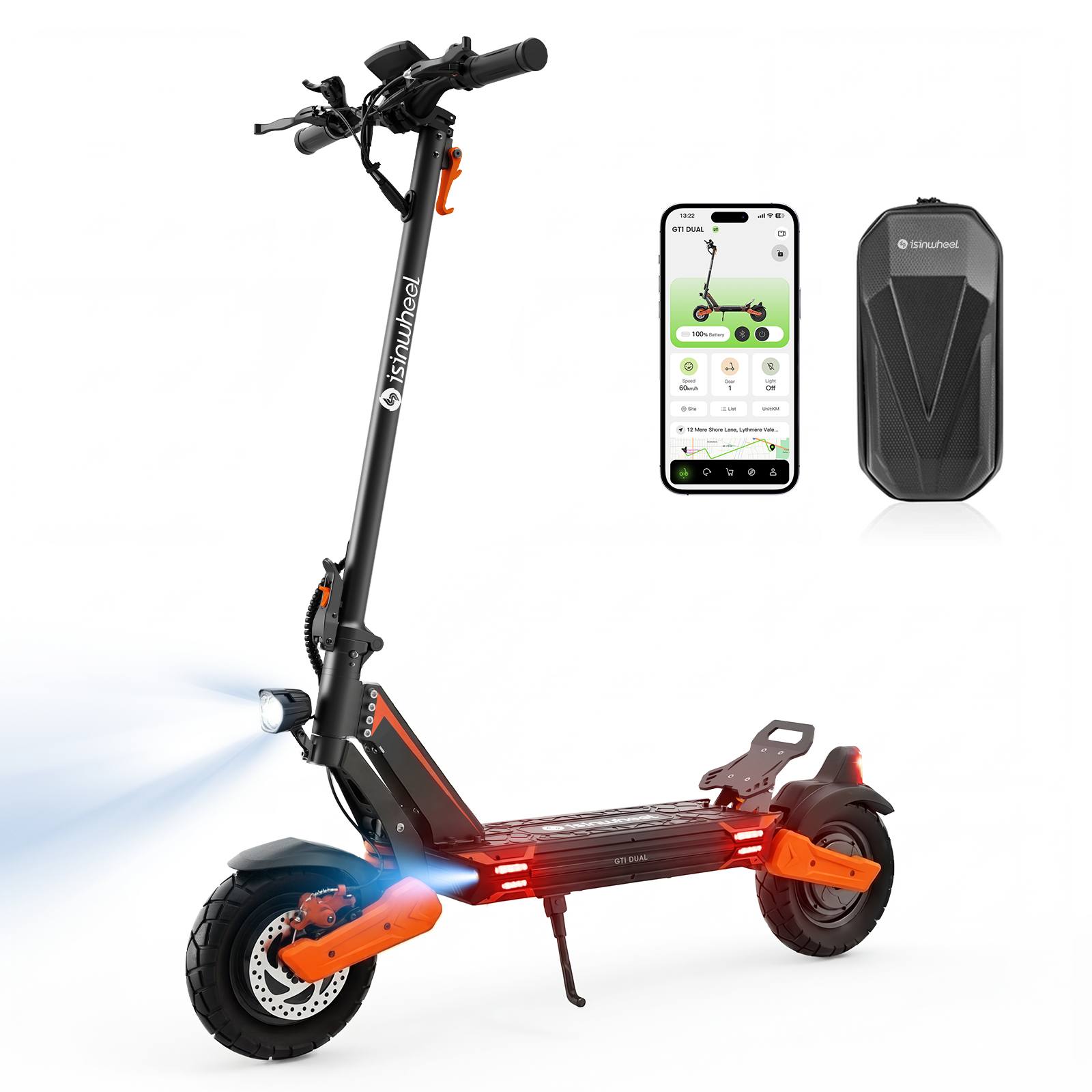
If you want a concrete benchmark for durable Isinwheel electric scooters, the GT1 is a useful one. According to iSinwheel’s product and spec pages, the GT1 uses dual 800W motors, a 48V 13Ah battery, 10-inch off-road pneumatic tires, front and rear dual swing arm suspension with 45 mm travel, EABS plus disc braking, and a claimed 330 lb max load. It also lists a 32 MPH top speed, 35-mile max range, IPX4 water resistance, a 73 lb net weight, and a folding time of about 3 seconds.
GT1 specs that matter most
- Dual 800W motors for stronger hill starts and better torque reserve.
- 48V 13Ah battery, rated at 624 Wh on the product page.
- 10-inch off-road pneumatic tires for grip and impact absorption.
- Front and rear dual swing arm suspension with 45 mm travel.
- EABS plus disc braking for more controlled stopping.
- Aluminum frame and 330 lb claimed maximum load.
- IPX4 water resistance for light weather exposure.
- App connectivity, turn signals, ambient lighting, and headlight integration.
What this means in practice
For rough-use buyers, the GT1’s value is not just peak speed. The better signal is the feature combination. Dual motors help more than raw MPH when you hit loose climbs or carry a heavier rider. Suspension travel and pneumatic tires matter more than marketing language when washboard sections start beating up the scooter. The 330 lb load rating is also meaningful for heavier riders or riders carrying tools, a lock, or small cargo for Last-mile Delivery work. That is the kind of spec stack that makes a scooter useful as both an Electric ride for outdoor adventure and a capable Scooter for urban commuting.
Shop: GT1 Dual Motor Off-Road Electric Scooter
How to Choose the Right Scooter for Your Terrain
The best off-road Electric Scooters are not the same for every rider. A ranch road rider, a weekend trail rider, and a mixed-use commuter all need different balances of torque, portability, and braking feel. The right decision starts with your route, not the product page headline.
Match the scooter to surface type
- Loose dirt and gravel: prioritize dual motors, pneumatic tires, and suspension that stays composed over chatter.
- Packed trail and pavement mix: choose balanced geometry, solid brakes, and manageable weight.
- Wet or muddy use: look harder at tread pattern, braking consistency, lighting, and water resistance.
- Steep hills: motor torque and hill-climb ability matter more than advertised top speed.
Check power and control together
A common buying mistake is treating motor output as the only performance metric. In reality, power and control must be matched. A scooter with strong acceleration but weak brakes creates fatigue and risk, especially downhill. The GT1’s dual-motor setup is paired with EABS and disc braking, which is a better off-road recipe than strong motors alone. NHTSA notes that it is harder to control or stop on slick roads, so wet-surface riders should put extra weight on braking feel, tire quality, and conservative speed planning.
Review ownership realities
Your scooter still has to work on normal days, not just fun rides.
- Foldability matters if you carry it into an apartment or office.
- Parts access matters if you want lower downtime.
- Lighting matters if your ride ends after sunset.
- Electric scooter accessories such as locks, bags, and phone mounts can improve utility, but only if they mount securely.
- If you value Fast delivery electric vehicles, iSinwheel states that many products ship from U.S. warehouses in 2 to 5 business days.
Which Decision Factors Matter Most in 2026?
In 2026, buyers are looking beyond speed. They are comparing durability economics: how long a scooter stays stable, safe, and useful under repeated stress. That is a smarter way to shop for Sustainable electric vehicles and Green commuting solutions, because a machine that lasts longer usually creates fewer replacement headaches and less waste over time.
High-priority decision factors
- Motor output under load: heavier riders should pay attention to real climbing support, not unloaded speed claims.
- Brake quality: downhill dirt and wet pavement demand reliable stopping, not just fast acceleration.
- Battery safety: strong BMS protection helps manage heat, charge cycles, and cell balance.
- Suspension behavior: repeated small hits can be more punishing than one big bump.
- Tire traction: mixed-surface riding exposes weak tread and poor casing quality quickly.
- Frame durability: stem stability and chassis rigidity affect confidence every minute of the ride.
| Rider need | Best fit category | Why it works |
|---|---|---|
| Compact off-road power | Durable off-road scooter | Better portability and quick folding |
| Longer seated mixed-terrain rides | All-terrain e-bike | Bigger wheels smooth rough surfaces |
| Short, agile fun rides | Off-road skateboard | Highly nimble, but less forgiving |
| Urban storage constraints | Folding e-bike or folding scooter | Easier apartment and trunk fit |
Off-Road Setup Tips and Common Buying Mistakes
Even durable Electric Scooters wear quickly if the setup is sloppy. Small issues like loose hardware, wrong tire pressure, and neglected brake adjustment create bigger problems after a few hard rides. A smart setup routine protects both the machine and your confidence.
Do’s
- Inspect stem, handlebar, axle, and deck bolts before rough rides.
- Keep tire pressure in the manufacturer’s recommended range for your rider weight.
- Test braking on low-speed loose ground before a longer trail session.
- Charge indoors only with the correct charger and watch for heat or damaged cables.
- Clean mud, dust, and grit off wheel and brake areas after wet rides.
- Recheck fasteners after the first few rides because vibration can loosen new hardware.
Don’ts
- Do not buy from speed claims alone.
- Do not exceed the rated load capacity with cargo, locks, and rider weight combined.
- Do not run street-focused tires on rough dirt if traction matters.
- Do not ignore early signs of brake rub, stem play, or battery overheating.
- Do not leave a depleted battery unused for long periods in extreme heat or freezing conditions.
Conclusion
The most durable off-road Electric Scooters in 2026 win on structure, control, and battery protection long before they win on speed. If you evaluate frame stability, suspension travel, tire type, braking hardware, real load support, and battery management, you will make a far better decision than if you shop by headline specs alone.
For riders who want a practical benchmark, the GT1 shows what a value-focused off-road setup looks like: dual 800W motors, 48V 13Ah battery capacity, 10-inch pneumatic tires, dual swing arm suspension, and a 330 lb max load in a folding format. And if your needs expand into Electric Bikes, Electric Skateboards, or wider Eco-friendly transportation alternatives, the same principle still applies: match the vehicle to your terrain, your routine, and the amount of maintenance you are actually willing to do.
FAQ
How do I evaluate durability in an off-road electric scooter?
Start by checking frame rigidity, stem stability, suspension design, tire type, and braking hardware. Then compare the motor and battery setup to your real terrain, body weight, and climb needs instead of looking only at top speed. A durable scooter should also have clear load limits, practical maintenance access, and battery protection that can handle vibration and repeated charge cycles. If the scooter feels under-braked or under-tired for its power, it is not a durable off-road choice.
Are dual motors necessary for off-road riding?
No, dual motors are not always necessary, but they are very helpful for hills, loose surfaces, and heavier riders. They improve torque delivery, reduce strain during climbs, and usually make acceleration under load feel more controlled. For hard-packed paths and lighter riders, a strong single-motor scooter can still work well if the brakes and tires are good enough. Once the route includes repeated steep grades or soft terrain, dual motors become much easier to justify.
What tire features matter most for rough terrain?
Pneumatic tires matter most because they improve grip and absorb vibration better than solid tires. Diameter affects how easily the scooter rolls over roots, rocks, and cracks, while tread pattern affects loose-surface traction and braking feel. For many adult off-road scooters, a 10-inch tire is the practical minimum, and larger or wider tires usually improve comfort and confidence. Tire pressure also matters because overinflation reduces grip and underinflation increases drag and rim risk.
How important is battery protection for off-road scooters?
Battery protection is critical because off-road riding creates more vibration, heat spikes, and current demand than smooth commuting. A good battery management system helps control charging, temperature, and cell balance, which supports both safety and service life. Riders should also care about charging habits, water resistance, and whether the scooter uses the correct charger every time. A fast scooter with weak battery protection is not a durable scooter.
Can an off-road scooter still work for commuting?
Yes, many off-road scooters also work well for commuting if the weight, folding design, and range fit your daily routine. The trade-off is that a tougher scooter is often heavier and less convenient to carry upstairs or onto transit. Mixed-use riders should prioritize lights, secure folding hardware, dependable brakes, and enough battery reserve to avoid daily deep discharges. That combination makes the scooter more practical as both a weekday commuter and a weekend trail machine.
What maintenance routine helps preserve durability?
A simple post-ride routine preserves durability better than waiting for something to fail. After rough rides, inspect the tires, brakes, stem, folding latch, deck bolts, and wheel hardware, then clean off dirt and moisture before storage. Charge the battery with the correct charger, avoid long idle periods at very low charge, and store the scooter in a dry temperature-stable space when possible. A 5 to 10 minute inspection after each demanding ride can prevent much more expensive repairs later.
Table of Contents
- Understanding Durable Off-Road Electric Scooters
- What Makes an Off-Road Scooter Truly Durable?
- GT1 Dual Motor Off-Road Electric Scooter: Why It Fits the Category
- How to Choose the Right Scooter for Your Terrain
- Which Decision Factors Matter Most in 2026?
- Off-Road Setup Tips and Common Buying Mistakes
- Conclusion
-
FAQ
- How do I evaluate durability in an off-road electric scooter?
- Are dual motors necessary for off-road riding?
- What tire features matter most for rough terrain?
- How important is battery protection for off-road scooters?
- Can an off-road scooter still work for commuting?
- What maintenance routine helps preserve durability?

Share:
Winter Electric Scooter Maintenance Tips for Cold Weather Riding
3 Best Value Off-Road Electric Bikes With Strong Suspension