




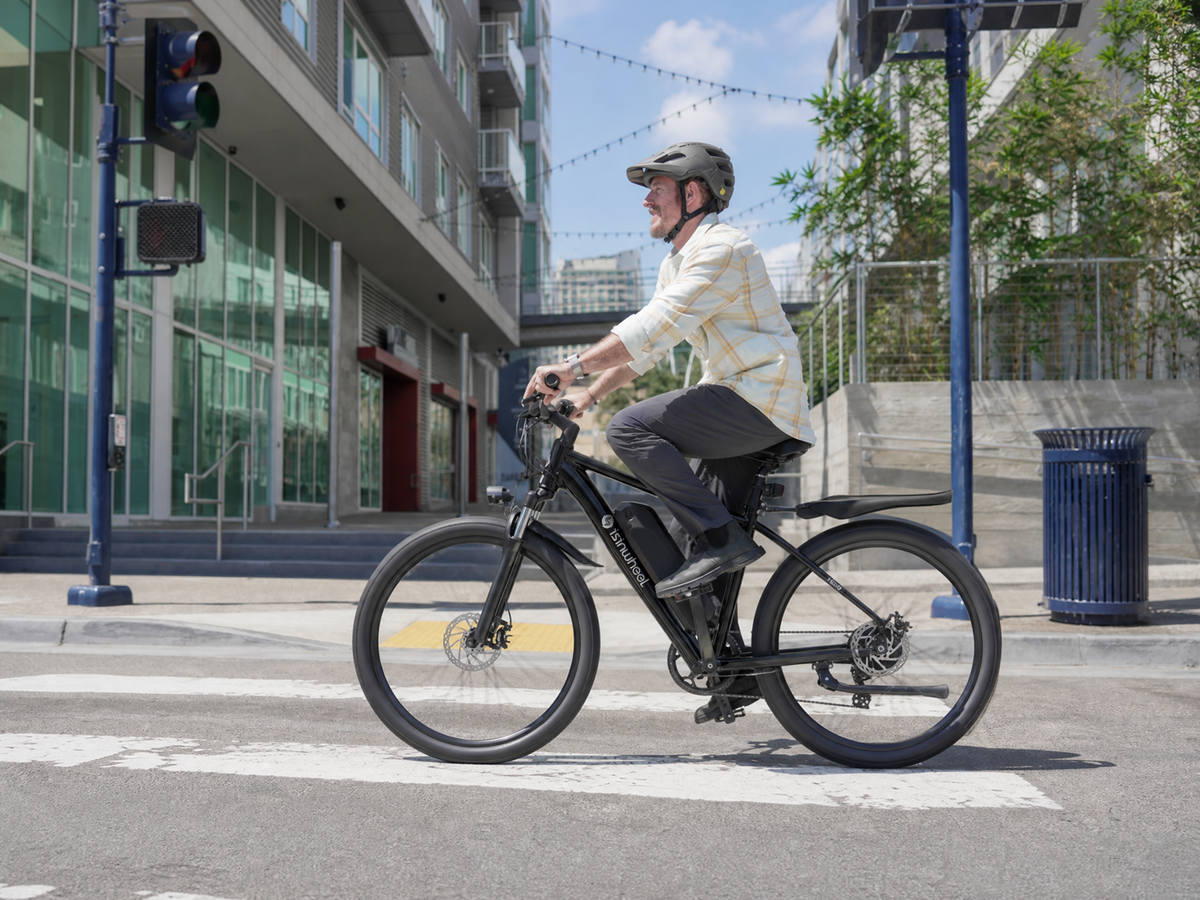

Is Your E-Bike Doing More Than It Could Be?
Probably not yet and that's the point of this article. Most people buy an electric bike to replace a daily commute, but once you actually own one, it tends to quietly take over a lot of other trips too: the grocery run, the school drop-off, the weekend outing you'd normally drive to. If your iSinwheel e-bike is only leaving the garage on weekdays, you're likely missing out on some of the more practical (and more fun) ways it can fit into everyday Canadian life.
Here are seven uses worth trying, along with the kind of e-bike that tends to suit each one.
1. Replacing the Car for Grocery Runs
A quick trip to the grocery store is one of the easiest car trips to swap for an e-bike, especially if you live within a few kilometres of a store. The trick is having enough cargo capacity to actually carry the load home without balancing bags on the handlebars.
This is where a cargo-style e-bike earns its keep. The isinwheel U7S is built with exactly this in mind, offering enough frame space and stability to handle a full grocery haul without feeling top-heavy on the way back.
2. School Runs and Family Errands
Between drop-offs, pickups, and after-school activities, family logistics can eat up a surprising amount of driving time and gas money. An e-bike with a sturdy frame and reliable braking can take over shorter family trips, especially in neighborhoods with dedicated bike lanes.
For families who want more carrying capacity for kids' bags, sports gear, or even a young rider, the isinwheel Ucargo tricycle offers extra stability and cargo room that a standard two-wheeler can't match.
3. Weekend Camping and Overnight Trips
Canada's provincial parks and campgrounds are hard to beat for a weekend escape, and an e-bike can be a genuinely useful part of that trip whether you're riding it to a nearby trailhead, exploring a campground, or covering ground once you've parked the car for the day.
Look for a model with solid tire grip and enough battery range to handle unpaved campground roads without draining the battery before you've even reached the site.
4. Low-Impact Exercise on Your Own Schedule
Not every ride needs a destination. Riding an e-bike, especially with lower pedal-assist levels, still gets your body moving without the joint strain of running or the time commitment of a full workout. It's a low-pressure way to build activity into a normal day, particularly through colder months when motivation to exercise outdoors tends to drop.
5. Exploring Local Trails and Conservation Areas
Many Canadian cities sit close to multi-use trails, conservation areas, or river paths that are easy to reach but rarely explored on foot. An e-bike opens up more of that terrain in less time, letting you cover a longer loop on a Saturday morning than you would walking or on a standard bike.
For trail-friendly outings like this, an all-terrain model with wider tires and some suspension makes uneven paths and gravel far more comfortable to ride. There's more detail on choosing between models built for this kind of riding in this guide to iSinwheel electric bikes for commuting, adventure, and everyday riding.
6. Running a Small Side Business
E-bikes have become a practical tool for small, local businesses think baked goods delivery, plant sales, or handmade goods dropped off around the neighborhood. A cargo-capable e-bike cuts delivery costs compared to driving, and it's often faster for short distances in areas with heavy traffic or limited parking.
The isinwheel R6 Mini is compact enough for tight urban routes while still offering enough power to handle short local deliveries without feeling underpowered.
7. Taking Your Dog Along for the Ride
For smaller dogs, a front basket or rear cargo setup on an e-bike can turn a short walk into a longer outing without tiring out you or your pet halfway through. It's a popular option for city dwellers who want to cover more ground on daily dog walks, especially in warmer months when longer walks aren't always practical.
If pet transport is part of your plan, prioritize a bike with a stable, low centre of gravity and enough basket or rack space to secure a pet carrier safely.
Getting More Mileage Out of the Bike You Already Have
An e-bike bought for commuting rarely stays a one-purpose vehicle for long. Once you start using it for grocery runs, weekend trail rides, or the occasional camping trip, it tends to replace far more car trips than expected which is good for your wallet and for the number of short drives you're not making. If you're still deciding which iSinwheel model fits the way you actually plan to use it, it's worth thinking through battery range and cargo needs before motor power alone, since those two factors tend to matter more for everyday versatility. This electric bike battery guide is a useful next step if range is your main deciding factor.
What Canadian Riders Often Ask About Everyday E-Bike Use
Can an e-bike really replace a car for short trips?
For trips under a few kilometres, especially grocery runs and errands, a cargo-capable e-bike can comfortably replace most car use.
Are e-bikes practical in Canadian winters?
Many riders scale back to fair-weather use, but studded tires and proper layering make winter e-biking possible in milder regions.
Do I need a special e-bike for carrying kids or pets?
A cargo or tricycle-style e-bike with reinforced frame space is generally safer and more stable than adapting a standard commuter model.
Is it worth using an e-bike for small deliveries?
Yes, for short local routes an e-bike can be faster and cheaper to operate than a car, especially in denser neighbourhoods.
What should I prioritize if I plan to use my e-bike for more than commuting?
Cargo capacity and battery range typically matter more for varied everyday use than top speed or motor power alone.

Share:
From City Streets to Weekend Trails: How to Choose the Right iSinwheel E-Bike for Your Lifestyle