




Why the Range Number on the Box Rarely Matches Your Ride
The short answer: advertised range is measured under near-perfect conditions flat ground, steady low speed, light rider weight, and mild weather so your actual daily range will almost always come in lower. Hills, stop-and-go traffic, cold temperatures, and your own body weight all quietly eat into that number before you've even hit the halfway mark of your commute.
That's the part most buyers miss. They see "80 km" on a product page and assume it's a guaranteed figure, then feel let down when a real commute in Toronto traffic or a Calgary winter barely gets them two-thirds of the way there. It's not that the number is fake it's that it's a best-case scenario, not a forecast of your specific route.
What "Range" on a Spec Sheet Actually Measures
Manufacturers test range under controlled conditions: a rider around 75 kilograms, flat pavement, moderate speed, and no wind resistance. Almost nobody rides exactly like that every day. Once you factor in your actual weight, your actual hills, and your actual stop signs, the number shifts. This isn't unique to isinwheel it's true of e-scooter range testing across the industry, and the relationship between battery size and everyday riding distance holds no matter which brand you're comparing.
The Hidden Costs That Eat Into Your Real-World Range
Hills and Elevation Changes
Climbing takes far more energy than cruising on flat ground. Even a few moderate inclines the kind you'll find riding through hillier neighbourhoods in cities like Hamilton or parts of Vancouver can pull your range down noticeably, since the motor has to work harder against gravity the entire way up.
Stop-and-Go City Riding
Every stop and restart costs energy. Riding through frequent intersections, crosswalks, or crowded sidewalks uses more battery than a steady, uninterrupted ride of the same distance, because accelerating from a full stop draws more power than maintaining speed.
Rider Weight and Cargo
Advertised range is usually tested with a lighter rider and no extra cargo. Add a backpack, groceries, or simply a heavier rider, and the motor works harder for the same distance, which shortens the range you'll actually get.
Weather and Temperature
Cold weather reduces battery efficiency, sometimes noticeably. Riding through a Canadian winter can shrink your usable range compared to a mild spring day, even on the exact same route.
Speed Mode Choice
Riding in the highest speed setting drains the battery faster than a moderate or eco mode. If you tend to ride at top speed rather than a cruising pace, expect your real range to land well under the advertised maximum.
How to Estimate Your Real Range Before You Buy
A simple rule of thumb: take the advertised range and mentally discount it by roughly 20–30% for a realistic everyday estimate, more if your route includes hills or cold-weather riding. That adjusted number is a far more honest planning figure than the one on the spec sheet. It's also worth comparing how different models perform over longer distances specifically, since higher-capacity batteries hold up differently under the same conditions.
Matching Range to Your Actual Route
Short, Flat Commutes
If your round trip is under 15 kilometres on mostly flat pavement, you don't need to chase the highest range number available. A commuter-focused model like the isinwheel H7 covers that distance comfortably without paying for capacity you won't use.
Hilly or Mixed-Terrain Routes
Elevation changes are one of the biggest hidden range costs, so if your commute includes hills or uneven surfaces, prioritize motor power and battery capacity over the headline range figure alone. A dual-motor option like the isinwheel GT1 Dual is built to handle that kind of demand without straining.

Long-Distance or Multi-Stop Commutes
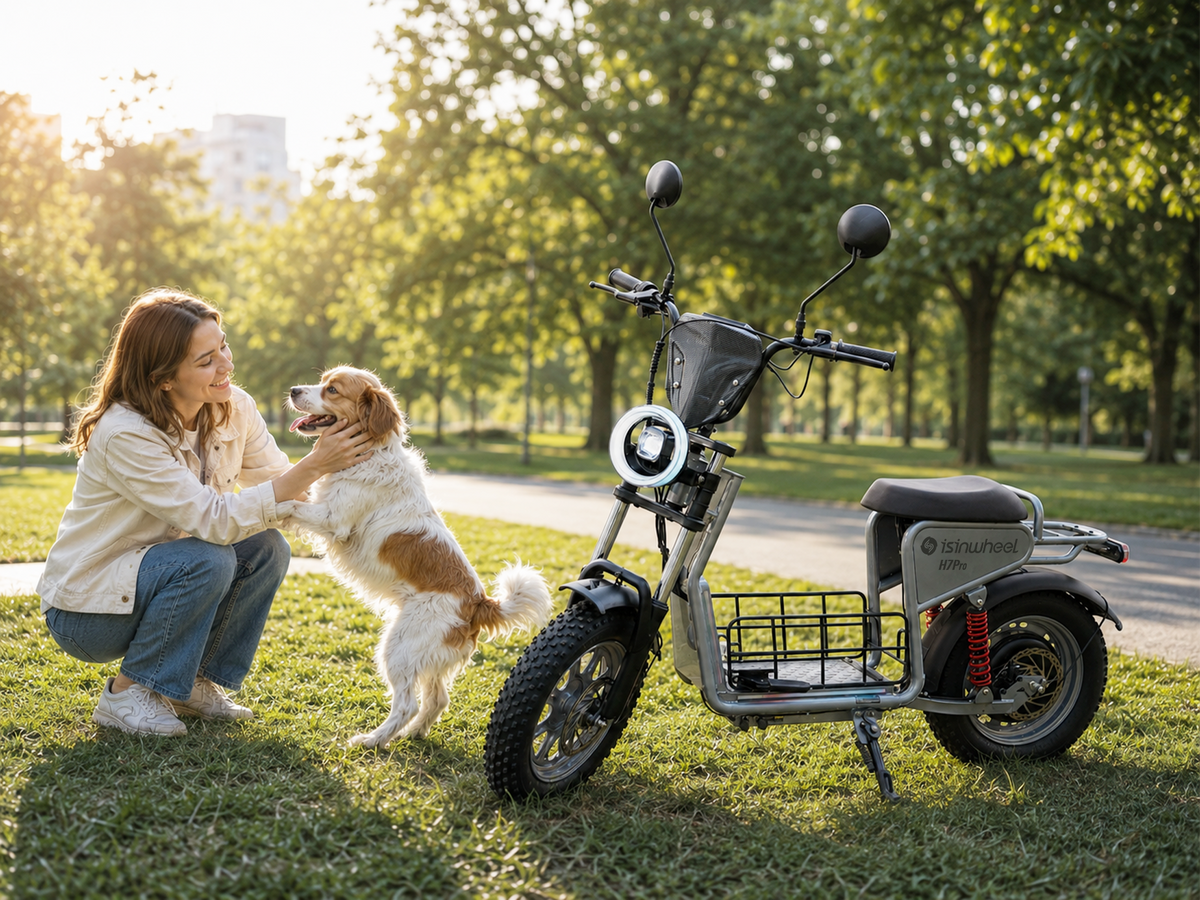
For longer daily distances, or routes with multiple stops along the way, it helps to start with a larger battery buffer so the real-world dip in range doesn't leave you short. A higher-capacity seated model like the isinwheel H7 Pro gives more room to absorb those hidden costs.

Buy for the Route You Actually Ride, Not the Number on the Box
Range numbers aren't wrong, exactly they're just measured under conditions that rarely match daily life. Hills, cold mornings, stop-and-go traffic, and your own body weight all take a bite out of that figure before your ride is even halfway done. The smarter approach is to treat the advertised range as a ceiling, not a promise, and choose a scooter with enough buffer for the route you actually ride across Canadian cities and climates, not the route in the lab test.
What E-Scooter Riders Want to Know
Why does my scooter's real range never match the advertised number?
Advertised range is measured under ideal conditions flat ground, mild weather, and a lighter rider so real-world factors like hills and cold temperatures naturally bring the number down.
How much should I discount the advertised range when planning my commute?
A reasonable estimate is 20–30% less than the advertised figure, with a bigger discount if your route includes hills or cold weather.
Does riding in eco mode actually extend my range?
Yes, lower speed modes use less power per kilometre, which noticeably stretches your usable range compared to riding at top speed.
Does cold weather really affect battery range that much?
Yes, colder temperatures reduce battery efficiency, so Canadian winter rides typically cover less distance than the same route in mild weather.
Should I buy extra range "just in case"?
A modest buffer above your daily distance is smart, since it accounts for hills, weather, and cargo without requiring you to plan every ride around a fully charged battery.

Share:
Electric Bike vs Electric Scooter in Canada: Which Is Better for Your Daily Commute?