




Choose for terrain first, not just the lowest price

A cheap-looking deal can turn into an expensive mistake once you hit gravel, broken pavement, or short hills. The wrong affordable off-road electric scooter often feels harsh, runs out of range early, or struggles when your route stops being smooth. A better buying process starts with where you actually ride, then works backward into power, tires, suspension, and braking.
Isinwheel electric scooters are useful here because the lineup gives you a clear ladder from crossover commuting to stronger rough-terrain capability. As of September 2026, the off-road collection lists the GT1 at 800W with a 21-mile range, the GT2 at 1000W with a 37-mile range, the GT1 Dual with dual 800W motors and 35 miles, and the GT4 Dual with dual 1200W motors and 50 miles. That spread makes it easier to shop by real use case instead of hype.
Decide what kind of rough terrain you really ride
Before you compare models, sort your route into one of four buckets: light gravel, mixed pavement and park paths, steeper hills, or frequent rough-terrain use. That first filter matters more than color, display style, or claimed top speed because an electric scooter for rough terrain needs grip and control first.
What to do
- Light gravel and cracked paths: look for pneumatic tires and basic suspension
- Mixed weekday commuting plus weekend trails: prioritize range and tire size
- Repeated hill starts: move up in motor output
- Frequent rough ground: focus on suspension and stronger brakes
Why this matters
A rider who wants an outdoor electric ride for weekday errands and park paths usually needs a different setup than someone tackling loose gravel every weekend. Isinwheel’s brand position also fits budget-focused buyers well; its About page says the company focuses on high-quality electric vehicles with strong cost-performance and affordable green transportation choices in the U.S. market.
Build a budget around performance, not wishful thinking
Price only helps after you know what capability you need. For an affordable off-road electric scooter, the most useful bands in this lineup are entry level, upper-budget, and performance-upgrade territory.
What to do
- Entry band: good for mostly paved routes with occasional rough patches
- Upper-budget band: best for buyers balancing trail ability and value
- Premium step-up: best for serious speed, braking, and rougher terrain
What to watch
For value shoppers, the GT1 fits crossover riding better than aggressive trail use. The GT2 and GT1 Dual sit in the stronger budget-adventure zone, while the GT4 Dual belongs to a higher-performance class. If your goal is eco-friendly transportation that also works for weekend fun, keep enough budget for safety gear instead of spending every dollar on headline power.
Focus on the four specs that matter most off-road
Motor power changes how the scooter feels when the ground turns loose or the grade turns steep. In Isinwheel’s current lineup, GT1 uses 800W, GT2 uses 1000W, GT1 Dual uses 800W x 2, and GT4 Dual uses 1200W x 2.
What to do
- Choose GT1 for lighter mixed use
- Choose GT2 for more balanced all-around performance
- Choose GT1 Dual if hills and acceleration matter most
- Choose GT4 Dual for the highest-output off-road riding
Use tire size and suspension to judge comfort and control

On rough surfaces, the tire and suspension package often decides whether the ride feels manageable or punishing. The GT1 Dual lists 10-inch off-road tires and EABS plus disc braking. The GT2 page lists 11-inch off-road pneumatic tires, dual hydraulic suspension, and EABS plus disc brakes. The GT4 Dual steps up again with 12-inch all-terrain tires, dual swingarm suspension, and hydraulic disc brakes.
Why this matters
- Larger tires roll over obstacles more smoothly
- Better suspension reduces fatigue on longer rides
- Brake quality matters more as weight and speed increase
According to the CPSC, riders should inspect brakes, tires, lights, and the frame before every ride because damage or poor condition can lead to loss of control.
Match the Isinwheel model to the way you ride
Best value for light off-road riding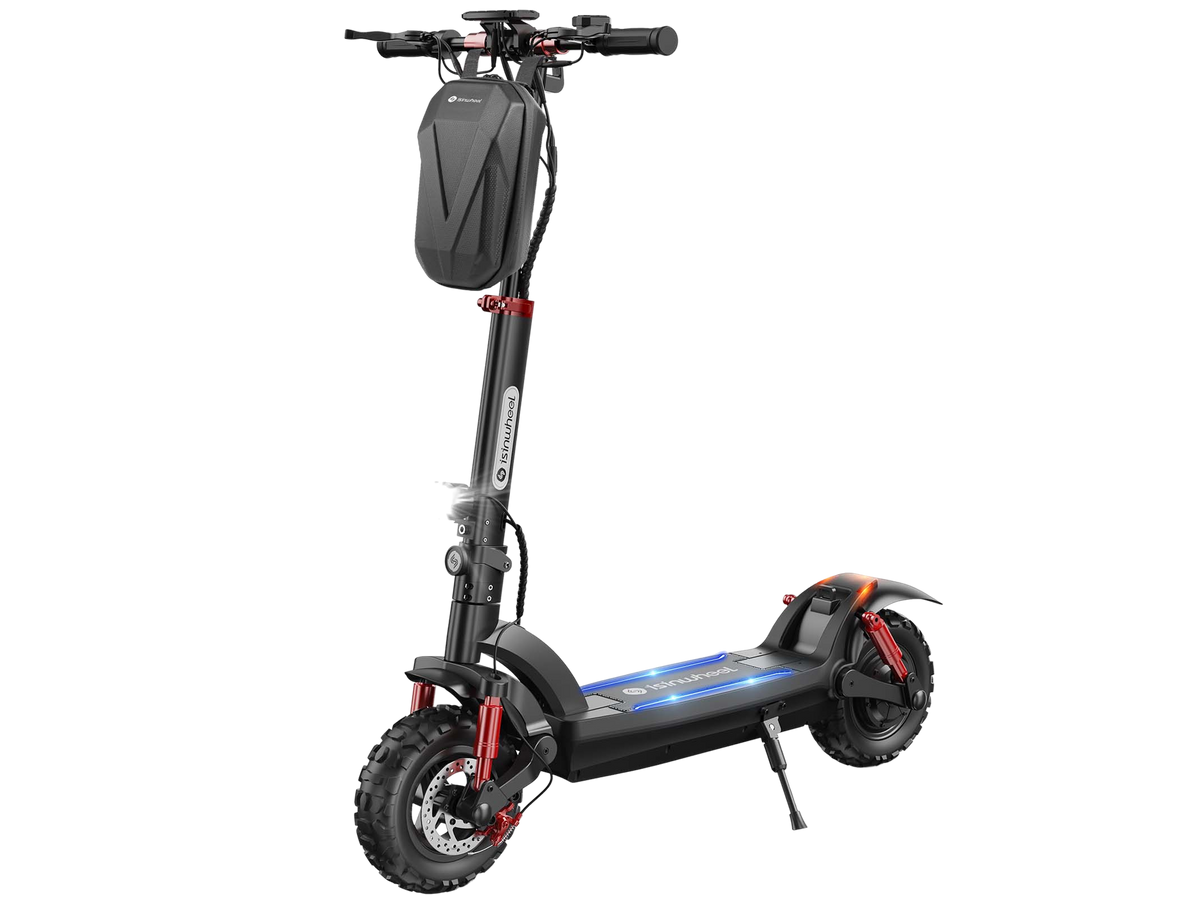
The GT2 is the most balanced pick for many buyers who want one scooter for park paths, mixed pavement, and light gravel. Its 1000W motor, 37-mile claimed range, 48V 15Ah battery, 11-inch off-road pneumatic tires, and dual hydraulic suspension make it the easiest middle-ground choice in the lineup.
- Best for: beginner adventure riders, mixed-use commuters, weekend path riding
- Strong point: more range and tire size than the basic GT1
- Watch-out: not the strongest acceleration option here
Best budget dual-motor option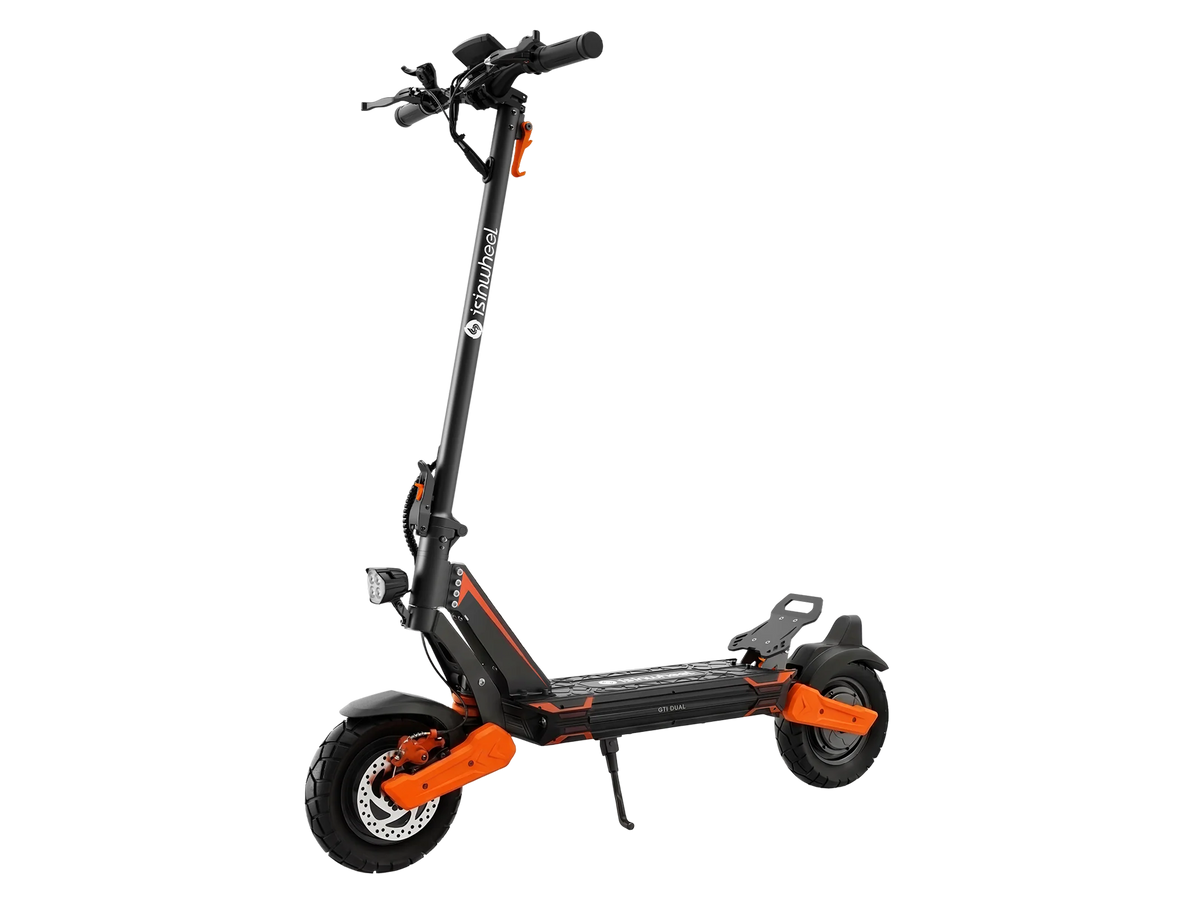
The GT1 Dual makes sense when your route includes more hills or you care more about stronger launch feel than maximum battery size. It lists dual 800W motors, 32 mph top speed, 35 miles of range, 48V 13Ah capacity, 10-inch off-road tires, and EABS plus disc brakes.
- Best for: heavier riders, hill starts, faster punch at similar budget levels
- Strong point: dual-motor performance without jumping to GT4 territory
- Watch-out: smaller tires than GT2 and GT4
Best high-power choice for serious off-road use
The GT4 Dual is the step-up choice for riders who want stronger speed, bigger tires, and higher-grade braking. It lists dual 1200W motors, 50 miles of range, a 52V 18.2Ah battery, 45 mph top speed, 12-inch all-terrain tires, dual swingarm suspension, hydraulic disc brakes, and a 330-pound payload.
- Best for: experienced riders, tougher terrain, stronger braking needs
- Strong point: the most complete rough-terrain package in the group
- Watch-out: more power than many casual riders need
Check safety, support, and ride-readiness before buying
Confirm braking, load limit, and pre-ride checks
A scooter can look perfect on paper and still disappoint if the safety setup does not match your route. Before you buy, verify brake type, payload, lighting, charging time, and whether the model fits your riding area and skill level.
What to do
- Check the stated max load against your body weight and gear
- Match speed tier to your experience level
- Inspect folding lock, tires, and brakes before every ride
- Slow down on loose gravel and downhill sections
What to watch
- High speed increases braking demands
- Added cargo reduces real range
- Local riding rules vary by city and state
The CPSC says riders should wear a properly fitted helmet every ride, and its micromobility guidance also reminds riders to follow local traffic laws because helmet and roadway rules vary by community.
Common problems and quick fixes
| Problem | Cause | Solution |
|---|---|---|
| Harsh ride on gravel | Limited tires or suspension | Move to GT2 or GT4 |
| Range feels too short | Hills, speed, rider load | Buy extra battery margin |
| Hill starts feel weak | Underpowered motor setup | Choose GT1 Dual or GT4 |
| Braking feels stressed | Speed exceeds brake tier | Match speed to terrain |
Conclusion
Selecting the right off-road electric scooter depends on matching performance to your daily terrain rather than chasing the lowest price. Key specs like motor power, tire size, suspension, and braking dictate comfort and control. Isinwheel's lineup offers options for every need—from the balanced GT2 for light gravel to the GT1 Dual for steep hills and the high-output GT4 Dual for rugged trails. Assessing your route, staying within budget, and prioritizing safety ensures a reliable ride beyond the pavement.
FAQ
How do I select an electric scooter for outdoor adventures and rough terrain for $800 or less?
You can choose an off-road electric scooter under $800 by filtering for terrain first, then battery, then braking. In the current Isinwheel lineup, the GT2 and GT1 Dual are the strongest candidates because they offer better rough-surface hardware than an entry commuter setup. The GT2 leans toward range and comfort, while the GT1 Dual leans toward stronger acceleration and hill confidence. If your riding is mostly paved with only occasional rough patches, the GT1 can still make sense as a lower-step option.
What’s the most durable electric scooter for off-road conditions?
The GT2 is the easiest model to recommend for that mixed-use job. Its 1000W motor, 37-mile claimed range, 48V 15Ah battery, 11-inch pneumatic off-road tires, and dual hydraulic suspension give you enough cushion for weekend gravel without making weekday rides feel overbuilt. It also gives you more route flexibility than the GT1 if you start taking longer rides. Choose the GT1 Dual instead if your commute includes more hills and you care more about launch feel than extra battery margin.
What’s the best-value electric scooter for light off-road exploration under $800?
For light off-road exploration under $800, the best-value choice is typically an entry-level off-road electric scooter from Isinwheel with 10-inch pneumatic tires, a solid suspension setup, and enough motor power for gravel paths, park trails, and uneven pavement. In this price range, prioritize stability, battery range, hill capability, and electric scooter safety features over peak speed, since those matter more for real outdoor use. Before buying, check the listed weight capacity, real-world range, tire tread, and whether key electric scooter accessories like lights and fenders are included.
Is a dual-motor scooter always the better buy for rough terrain?
No, a dual-motor scooter is not always the better buy. It is better when you regularly ride steep grades, carry extra gear, or want stronger launch and recovery on loose surfaces. For light gravel, park paths, and mixed commuting, a well-matched single-motor model with bigger tires and good suspension can be the smarter value. That is why the GT2 can be a better fit than the GT1 Dual for some beginners even though the GT1 Dual has more total motor output.
What should you check before riding on rough ground for the first time?
You should check tire condition, tire pressure, brake feel, lighting, folding-lock security, and the load you are carrying before your first rough-ground ride. Keep your speed lower than you would on clean pavement until you know how the scooter reacts on gravel, bumps, and downhill sections. A properly fitted helmet, visible gear, and a quick brake test in an open area should be part of every first ride. If the scooter feels harsh or unstable, that usually means your route needs more tire and suspension support than the model provides.
Table of Contents
- Choose for terrain first, not just the lowest price
- Decide what kind of rough terrain you really ride
- Build a budget around performance, not wishful thinking
- Focus on the four specs that matter most off-road
- Match the Isinwheel model to the way you ride
- Check safety, support, and ride-readiness before buying
- Conclusion
-
FAQ
- How do I select an electric scooter for outdoor adventures and rough terrain for $800 or less?
- What’s the most durable electric scooter for off-road conditions?
- What’s the best-value electric scooter for light off-road exploration under $800?
- Is a dual-motor scooter always the better buy for rough terrain?
- What should you check before riding on rough ground for the first time?

Share:
Which durable off-road electric scooter actually fits your terrain?
Why Would You Choose H7 Pro?